A Practical Methodology for Packaging Optimization in Manufacturing Supply Chains
Feb 05,2026 | X-INDUSTECH
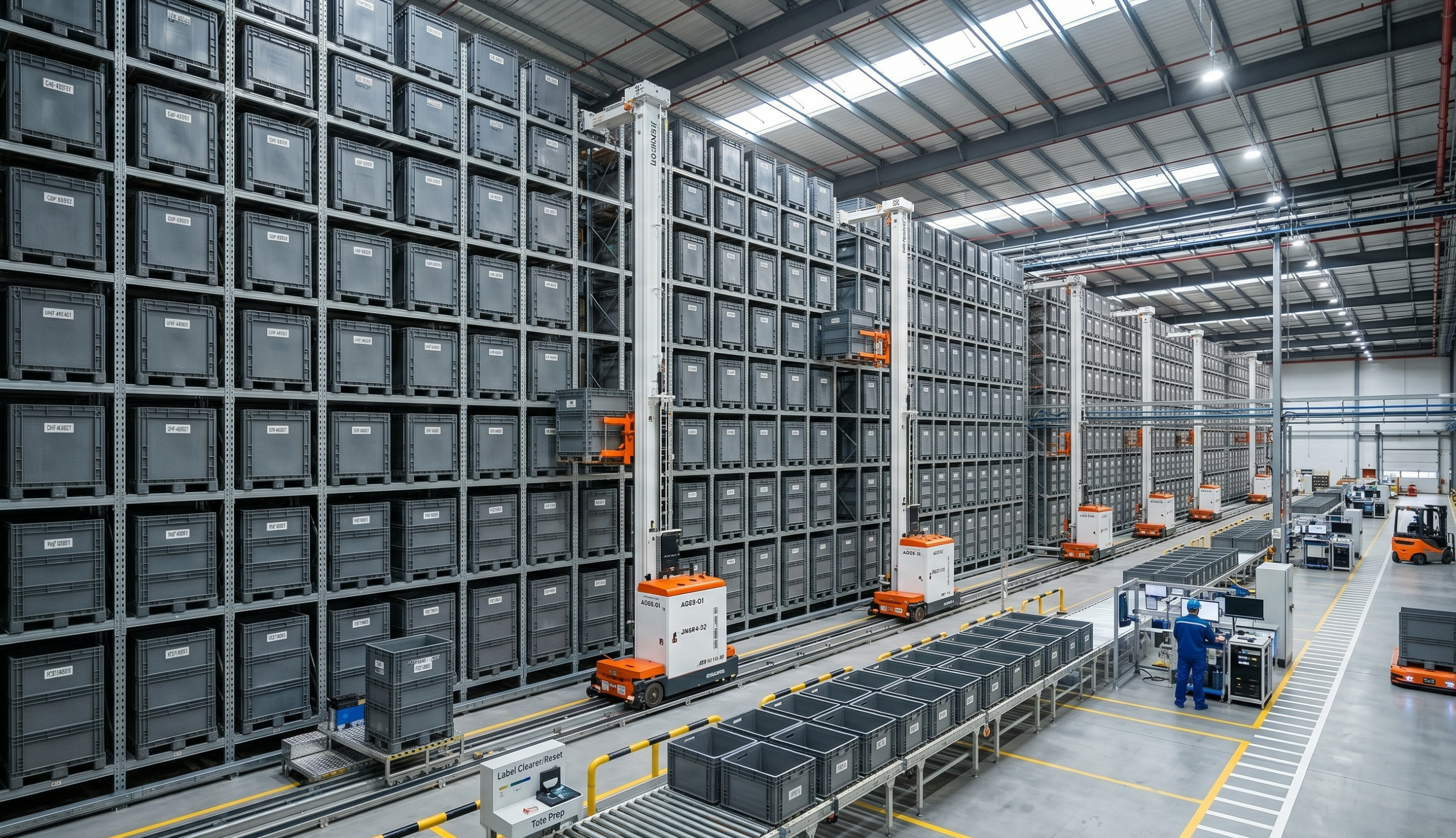
As manufacturing supply chains become more automated, globalized, and time-sensitive, packaging is increasingly recognized as a structural element of operations, not a secondary material choice. Leading manufacturers now treat packaging as part of process engineering—because packaging directly affects flow stability, productivity, cost, and scalability.

Industry frameworks such as Lean Manufacturing, Toyota Production System (TPS), and APICS Supply Chain Operations Reference (SCOR) all emphasize one shared principle: physical flow must be designed as a system. Packaging plays a critical role in that system.
What High-Performing Manufacturing Plants Require from Packaging
Well-run manufacturing plants tend to converge on a similar set of packaging requirements, shaped by years of operational learning.
First, plants aim to minimize repacking and secondary handling. According to Lean principles, each additional handling step introduces waste (muda) in the form of labor, time, and error potential (Source: Toyota Production System). Optimized packaging should travel from supplier to warehouse to line-side without interruption.
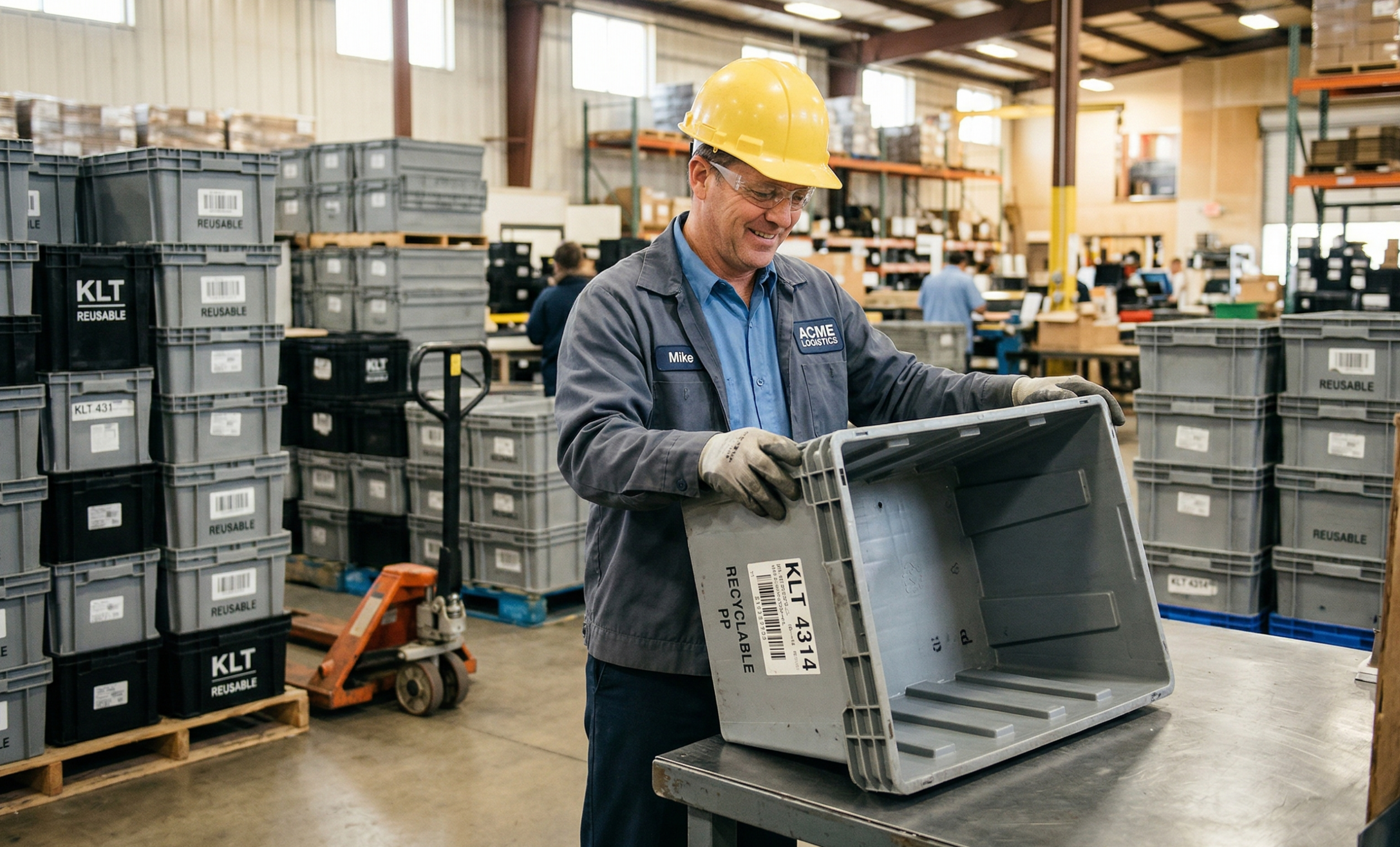
Second, there is a clear shift from single-use packaging (wooden crates, cartons) toward reusable, standardized KLT-style containers, especially in automotive, battery, and high-value manufacturing sectors. The VDA 4500 / VDA KLT standards were developed precisely to enable stable, repeatable logistics flows across suppliers and plants (Source: Verband der Automobilindustrie – VDA).
Third, manufacturers work to standardize and reduce packaging variation across suppliers. Excessive container types increase planning complexity, inventory, and error rates. APICS highlights standardization as a key lever for improving supply chain reliability and predictability (Source: APICS CPIM Body of Knowledge).
Fourth, auxiliary packaging materials—liners, dividers, protective elements—must support 0.5-hour consumption logic, aligning with takt time and the two-bin replenishment concept. This approach ensures packaging supports production rhythm rather than becoming a bottleneck (Source: Lean Production & Kanban Systems).
Fifth, mature organizations increasingly retain packaging design and standards internally, while outsourcing the operational management of reusable packaging—including circulation, cleaning, maintenance, and repositioning—to specialized third parties. This separation reflects a common supply chain best practice: keep strategic design in-house, outsource execution to experts (Source: SCOR Model – Make & Deliver Processes).
Finally, all packaging initiatives are evaluated against their ability to improve process stability, raise productivity, and reduce total system cost—not just unit packaging price.
The Core Methodology of Packaging Optimization
Across industries, effective packaging optimization consistently rests on three foundational pillars.
- Cargo Consolidation
Packaging must be designed around real material flow. Improved load density, stackability, and pallet utilization reduce transportation frequency, warehouse footprint, and handling time. From a systems perspective, consolidation lowers cost across multiple supply chain functions simultaneously (Source: Total Cost of Ownership – TCO Analysis). - Packaging Standardization
Standardized packaging simplifies procurement, training, automation compatibility, and multi-site deployment. It also improves quality consistency and supports scalable growth. APICS identifies standardization as a core enabler of supply chain maturity. - Reusable Packaging Strategy: Lease or Purchase
Once reusable packaging is adopted, manufacturers must choose between ownership and leasing. This decision affects capital allocation, asset utilization, and operational complexity.
Why Packaging Leasing Is Often the Preferred Model
For many manufacturers, packaging leasing has proven to be the most balanced solution.
Compared to disposable packaging, leasing eliminates repeated purchasing, waste, and variability. Compared to owning and self-managing reusable packaging, leasing reduces capital expenditure, administrative burden, and asset loss risk.
A professional leasing program typically includes:
- Just-in-time delivery of empty containers
- Circulation across suppliers, warehouses, and plants
- Cleaning, inspection, and maintenance
- Flexible scaling aligned with production volume
This allows manufacturers to benefit from reusable packaging without becoming packaging operators themselves—a key principle in modern supply chain outsourcing strategies.
Packaging Optimization Is a System Decision—Not a Packaging Decision
From a supply chain engineering perspective, packaging optimization influences:
- Transportation efficiency
- Warehouse utilization
- Labor productivity
- Automation compatibility
- Inventory stability
For this reason, packaging should be treated as infrastructure, not consumables.
The Importance of Choosing the Right Packaging Partner
Whether purchasing standardized containers or adopting a reusable packaging leasing model, the choice of packaging supplier is critical. An experienced, capable partner reduces friction, prevents hidden costs, and accelerates operational improvement.
A strong packaging partner should offer:
- Engineering-driven custom design capability
- Tooling and manufacturing expertise
- Scalable supply and lifecycle services
- Proven experience in real manufacturing environments
The right partner allows manufacturers to focus on production and supply chain performance—while packaging works reliably in the background.
X-INDUSTECH is built to meet—and exceed—these expectations.
From custom-engineered containers to standardized sales, leasing, maintenance, and recycling services, X-INDUSTECH supports packaging as a fully integrated part of modern manufacturing supply chains—turning packaging from a constraint into a competitive advantage
Comment