How Smart Packaging Drives Efficiency and Cuts Supply Chain Costs
Feb 26,2026 | X-INDUSTECH
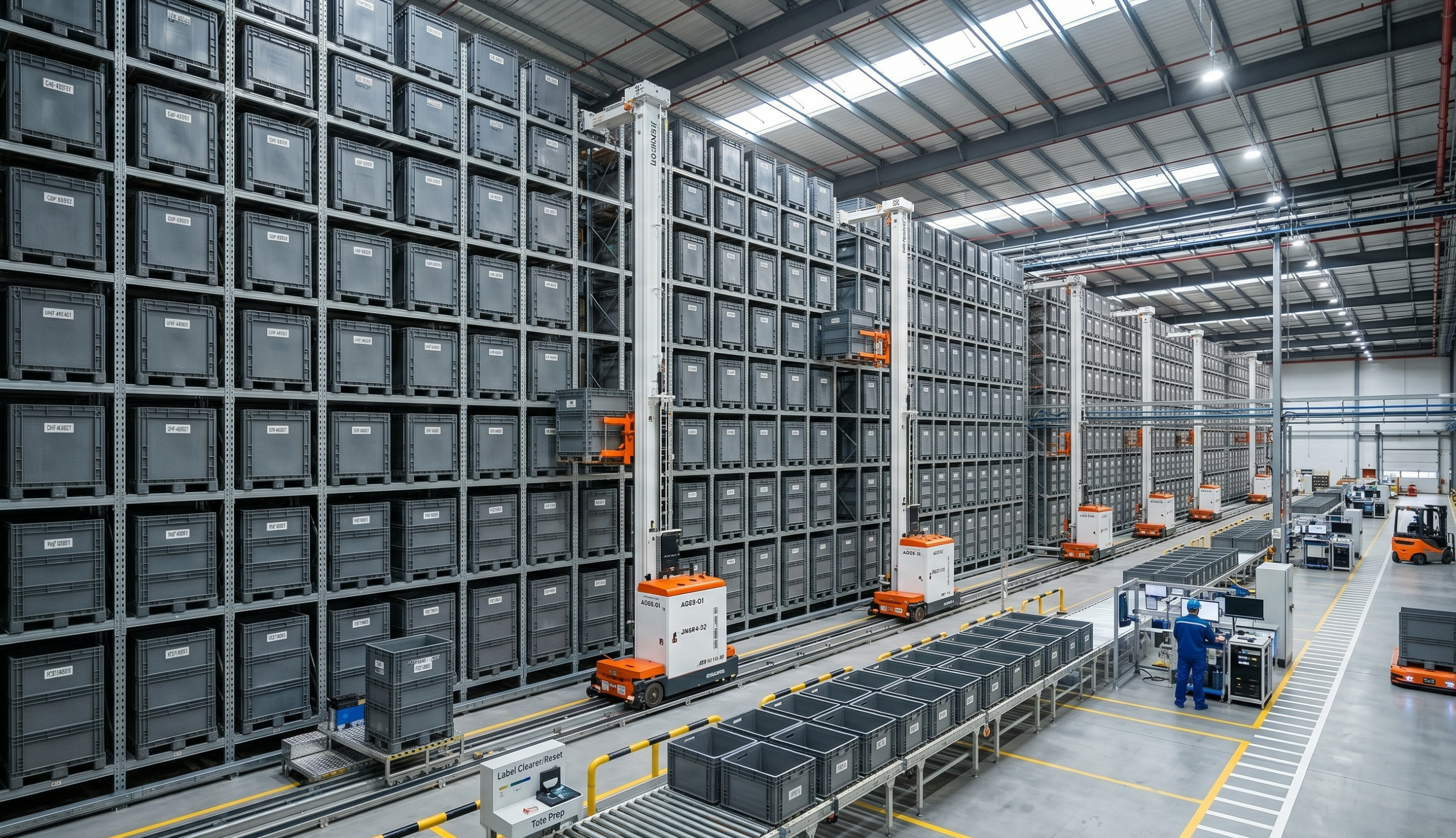
In modern manufacturing, cost control is no longer achieved through isolated savings. The most successful supply chains reduce cost by first improving operational efficiency.
Among all operational levers, packaging is one of the most overlooked—and most powerful. Packaging directly shapes how fast materials move, how reliably parts arrive, and how smoothly systems operate. When efficiency improves, cost reduction follows naturally.
High-performing organizations understand this relationship:
Better packaging → Higher efficiency → Lower total cost.
Packaging: The Foundation of Operational Efficiency
Packaging is not simply a container. It is the physical interface between suppliers, transportation, warehouses, and production lines. Every operational handoff depends on packaging performance.
When packaging is poorly designed, organizations experience:
- Slower handling
- Frequent repacking
- Higher error rates
- More downtime
- Greater variability
When packaging is engineered for operations, the opposite happens:
- Material flows faster
- Labor productivity increases
- Automation becomes reliable
- Inventory moves predictably
Efficiency becomes the default, not the exception.
1) Faster Handling = Lower Labor Cost
Manual handling remains one of the largest hidden cost drivers in supply chains. Every additional touch consumes time and labor.
Inefficient packaging leads to:
- Manual unpacking and repacking
- Two-person lifting
- Excessive taping and disassembly
- Inconsistent workflows
Optimized packaging enables:
- Direct transfer from inbound to line-side
- One-person handling
- Standardized work routines
- Faster picking and feeding
When handling time drops, labor cost drops automatically—without layoffs, simply through productivity gains.
2) Higher Warehouse Throughput = Lower Storage Cost
Warehouse efficiency is measured in throughput, not just square footage.
Packaging design affects:
- Slotting density
- Travel distance
- Put-away speed
- Retrieval reliability
Standardized, stackable, nestable, or foldable containers increase usable space and reduce congestion. Higher throughput means:
- Less overflow storage
- Lower facility expansion pressure
- Reduced equipment idle time
Improved efficiency directly translates into lower per-unit storage cost.
3) Better Load Efficiency = Lower Transportation Cost
Transportation cost is often viewed as uncontrollable. In reality, packaging strongly influences it.
Efficient packaging improves:
- Truck/container utilization
- Pallet stability
- Load uniformity
- Return transport efficiency
Higher load density means fewer trips. Fewer trips mean lower fuel, labor, and equipment cost. This is one of the fastest paths from packaging optimization to measurable savings.
4) Stable Automation = Higher System Productivity
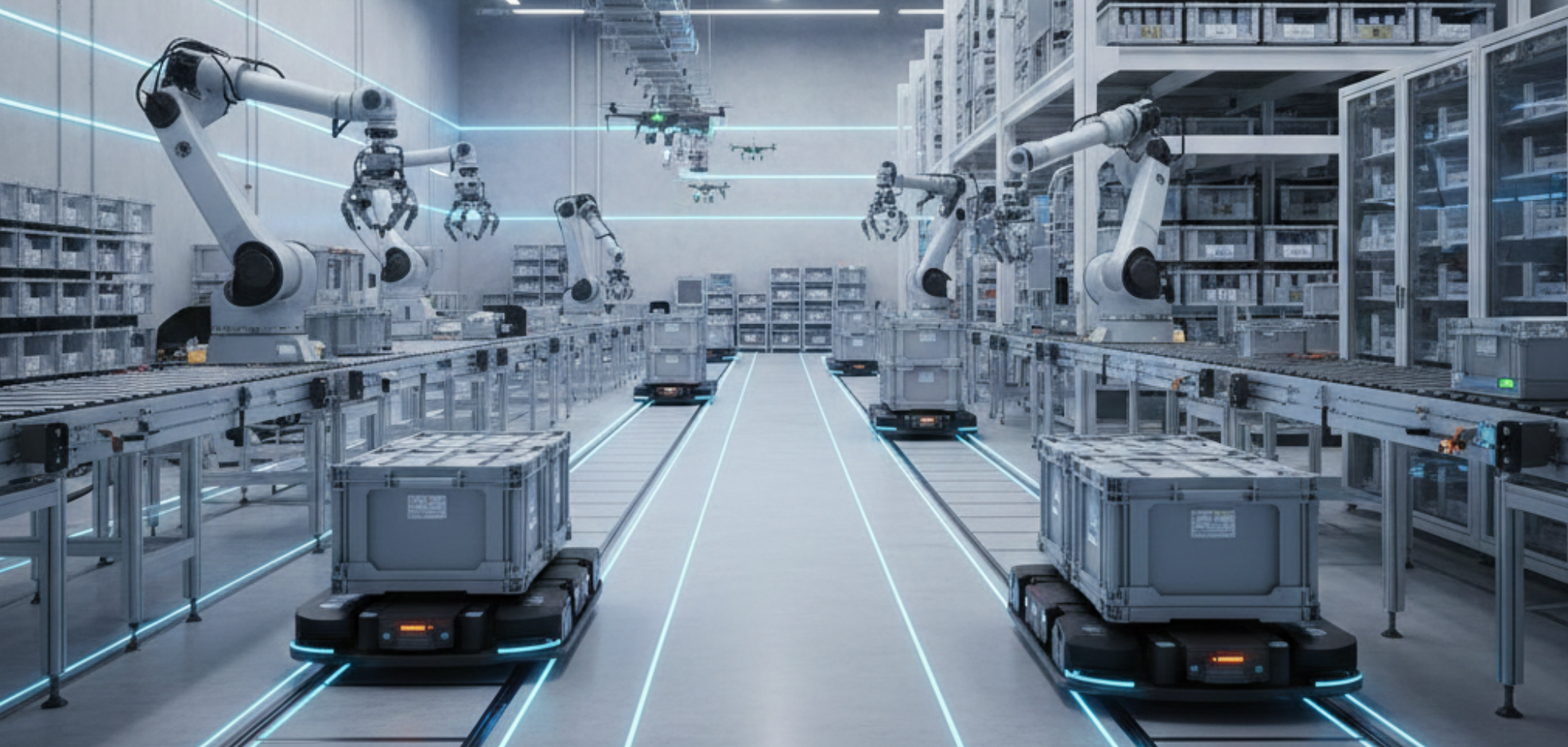
Automation only delivers value when packaging is compatible.
Poor packaging causes:
- Conveyor jams
- Palletizer errors
- Robotic handling failures
- Manual overrides
These disruptions reduce OEE and inflate operating cost.
Packaging engineered for automation enables:
- Consistent dimensions
- Reliable gripping and stacking
- Predictable flow
Stable automation increases uptime, lowers maintenance cost, and improves capital ROI.
5) Fewer Damages = Lower Hidden Costs
Damage is one of the most expensive forms of inefficiency.
Weak packaging increases:
- Scrap
- Rework
- Expedited freight
- Line stoppages
Each incident creates cascading cost.
Protective, structurally optimized packaging reduces these risks, preserving both throughput and profit margin.
6) Standardization = System-Level Efficiency
Standardized packaging reduces complexity.
It improves:
- Receiving speed
- Supplier compliance
- Training efficiency
- Process repeatability
Fewer exceptions mean fewer delays. System stability improves—and stable systems cost less to operate.
7) Faster Replenishment = Lower Inventory Cost
Packaging defines how inventory flows.
Optimized packaging supports:
- Two-bin systems
- Takt-aligned replenishment
- Smaller buffers
- Higher turnover
When material flows faster, less inventory is required. Lower inventory means reduced capital cost and obsolescence risk.
8) Efficient Reusable Systems = Lower Lifecycle Cost
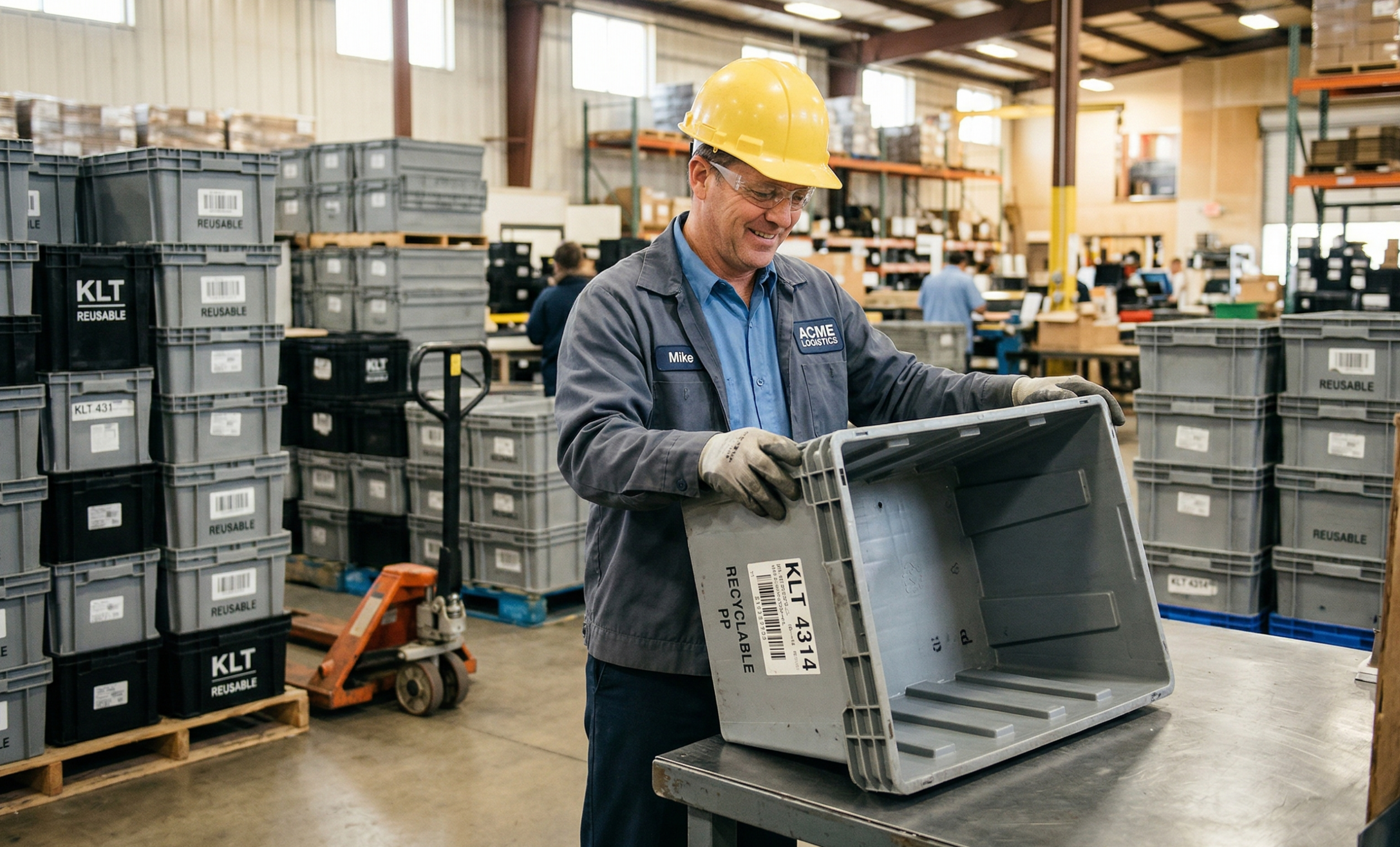
Reusable packaging only creates value when circulation is efficient.
Without management:
- Containers accumulate in the wrong locations
- Shortages appear
- Emergency purchases rise
With professional circulation management:
- Utilization increases
- Loss decreases
- Asset cost per cycle drops
Efficiency transforms reusable packaging into a long-term cost advantage.
Efficiency Is the Most Reliable Path to Cost Reduction
Across labor, warehousing, transportation, automation, inventory, and quality, the pattern is consistent:
Higher efficiency reduces cost without sacrificing performance.
Cost-cutting alone often damages operations. Efficiency improvement strengthens them.
That is why leading manufacturers focus on operational speed, stability, and flow first—knowing that cost optimization will follow.
How X-INDUSTECH Helps Customers Convert Efficiency into Savings
X-INDUSTECH designs packaging systems around real operational conditions, not catalog specifications.
We support customers through:
- Custom container engineering
- Standardized container supply
- Reusable packaging leasing programs
- JIT empty container delivery
- Cleaning, maintenance, and repositioning
- Used container and recycling services
By integrating packaging into the broader supply chain system, we help customers accelerate flow, stabilize operations, and systematically reduce total operating cost.
When packaging works, everything works better.
Comment