Standardize the Container, Accelerate the Warehouse
Apr 16,2026 | X-INDUSTECH
In warehouse automation, equipment gets most of the attention. But in many projects, the real performance bottleneck is not the machine — it is the load unit.
Automated storage and retrieval systems (AS/RS) are designed to store and retrieve materials with precision, accuracy, and speed under a defined level of automation. Industry sources describe AS/RS as computer-controlled systems used across manufacturing and distribution to handle raw materials, work-in-process, and finished goods more efficiently.
That is exactly why standardized returnable packaging matters.
If the container is inconsistent in size, stacking behavior, rigidity, or handling geometry, even advanced automation can lose efficiency. But when packaging is standardized and designed for mechanized handling, the result is different: denser storage, faster put-away and retrieval, smoother inventory control, and lower total warehouse cost.
Standardized Packaging Is More Than a Container Choice
For automated warehousing, packaging is not just a protection medium. It is the physical interface between the product and the automation system.
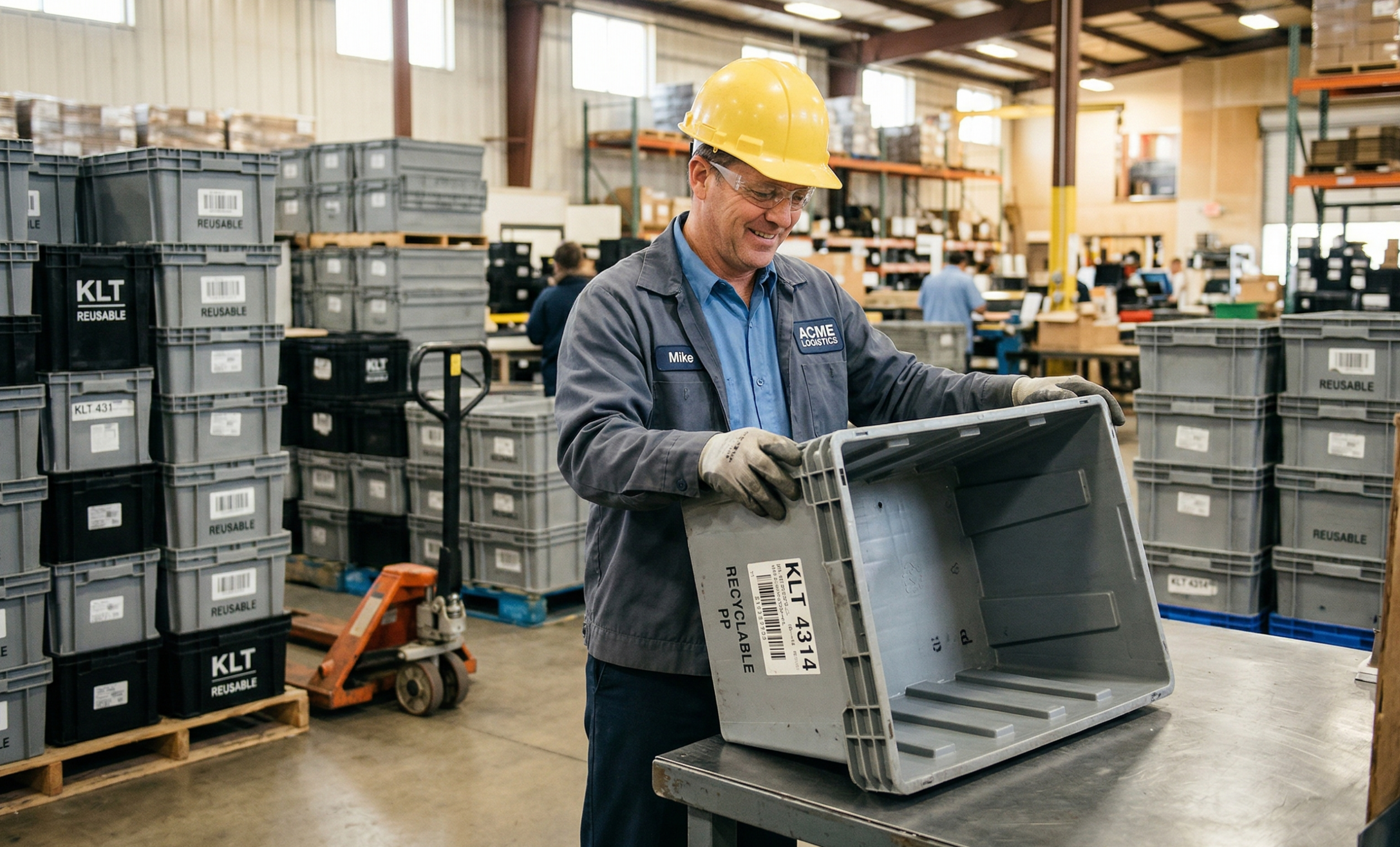
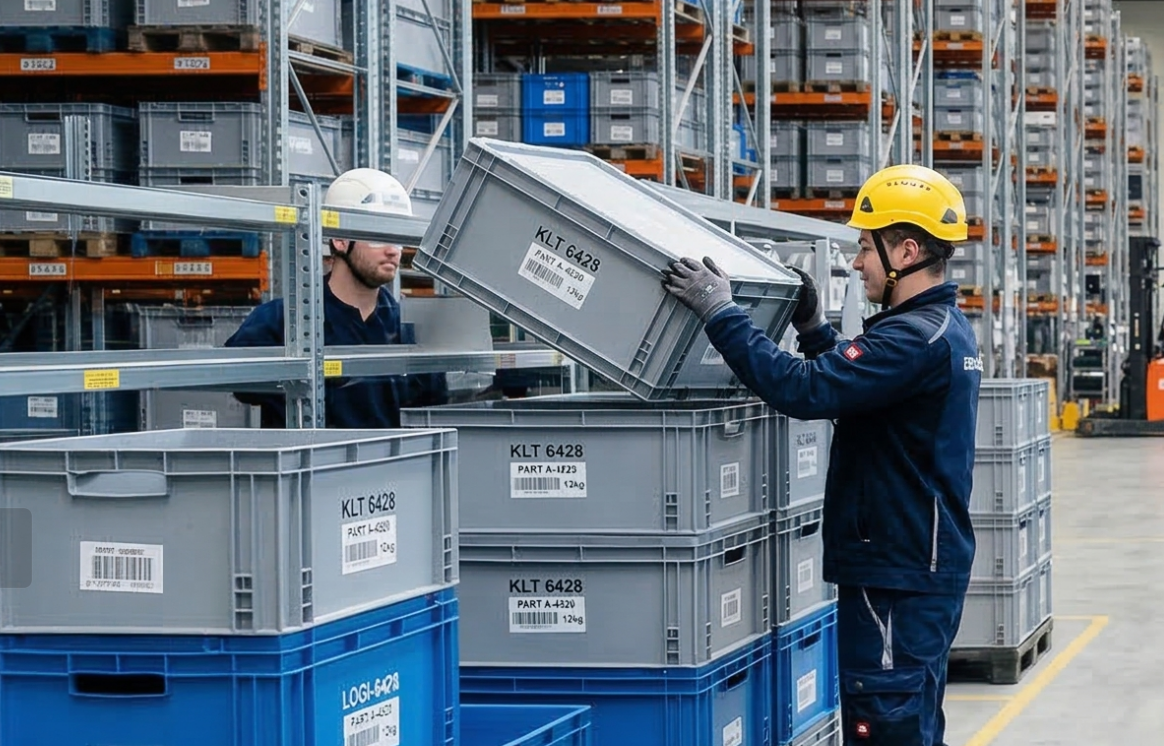
The VDA’s KLT system is a useful reference point. According to the VDA, the KLT system was developed as a standardized small load carrier system to increase logistics efficiency through containers that are standardized, automatable, and ergonomically designed. The same standard also emphasizes safe transport, cross-manufacturer compatibility, and space-saving empty-container logistics.
That logic extends well beyond automotive.
When packaging follows a stable standard, automation has something predictable to work with. That predictability becomes a direct source of efficiency.
Why Standardized Returnable Packaging Fits Automated Warehousing So Well
A standardized reusable container can match many different forms of automated warehousing, including:
- miniload systems
- shuttle systems
- pallet shuttle systems
- vertical lift modules
- cube-based storage systems
- automated shelving and tote-handling environments
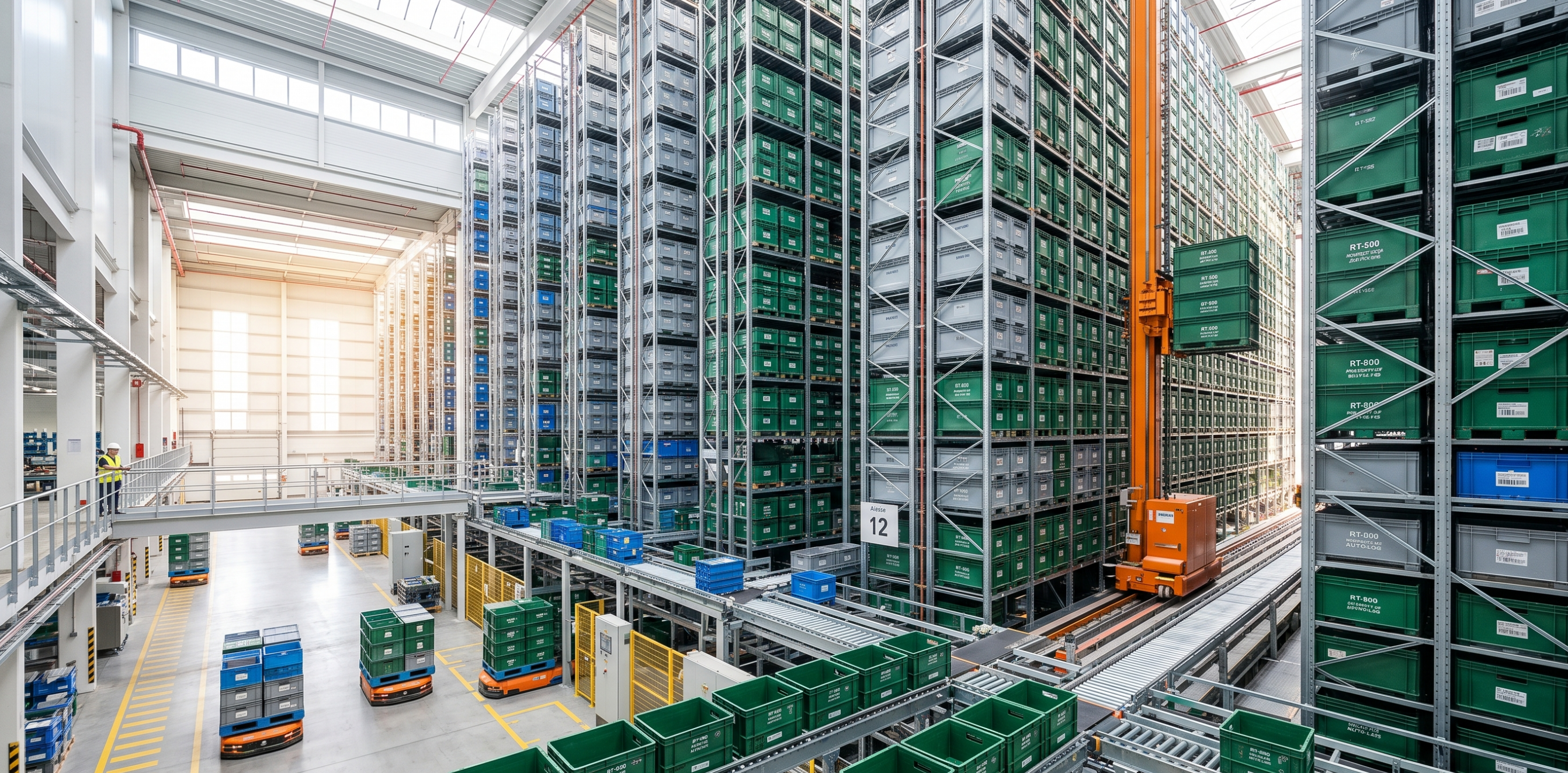
SSI Schaefer describes AS/RS as ranging from miniload and shuttle systems to pallet shuttle and vertical lift modules, all designed to automate the storage and retrieval of unit loads. The same company also notes that precisely dimensioned containers can be integrated into shelving systems without difficulty.
This is where standardized packaging becomes powerful:
one well-designed container family can support multiple warehouse architectures, making it easier for manufacturers to scale automation without reinventing the load unit every time.
1) Better Space Utilization Starts with a Standard Load Unit
One of the clearest business cases for automated warehousing is space.
AS/RS solutions are widely adopted because they can achieve higher storage density, streamline product storage, and improve inventory organization. SSI Schaefer specifically lists higher storage density within the warehouse footprint as a core AS/RS benefit.
But storage density does not come from software alone. It depends on whether the packaging itself fits the storage logic.
Standardized containers help by making it possible to:
- build consistent load patterns
- reduce wasted air space
- improve slotting accuracy
- support stable stack geometry
- simplify bin, tote, and pallet-position planning
In highly compact automated systems, the effect can be dramatic. AutoStore states that its cube-storage approach can reduce storage footprint by 75% compared with other storage solutions. That kind of density gain is only possible when containers are standardized and automation-compatible.
In practical terms, that means lower warehouse-area demand, lower building cost pressure, and more output from the same footprint.
2) Faster Inbound and Outbound Flow
Warehouse efficiency is measured not just by how much you can store, but by how fast you can move.
Standardized packaging improves:
- receiving speed
- put-away consistency
- replenishment rhythm
- retrieval accuracy
- outbound staging efficiency
When every container follows the same dimensional rules and handling logic, systems no longer need to slow down for exceptions. Operators spend less time correcting, re-orienting, re-packing, or manually intervening.
That is why standard packaging and automation work so well together: one reduces variability, the other converts that stability into throughput.
3) Lower Labor Dependency and Fewer Exceptions
AS/RS is often justified on labor grounds. SSI Schaefer notes that AS/RS can reduce labor overhead while increasing throughput capability and improving inventory organization.
But automated labor savings are only fully realized when the packaging is suited to the system.
Standardized returnable containers reduce exception handling by making it easier to:
- feed automation consistently
- minimize manual rework
- avoid non-standard storage positions
- reduce picking and handling errors
In other words, packaging standardization does not replace automation. It enables automation to deliver its promised labor efficiency.
4) Better Inventory Transparency
Inventory transparency improves when every load unit is consistent.
Once containers are standardized, warehouse systems can manage them more accurately because:
- dimensions are known
- stack behavior is predictable
- location logic is easier to maintain
- labeling and identification are easier to standardize
- inventory status is easier to visualize by container, pallet, or slot
That means more than nicer dashboards. It means better operational control.
A transparent inventory system helps planners and operators answer critical questions faster:
- what is stored where
- what is available now
- what is in motion
- what is delayed
- what is ready for retrieval
And when visibility improves, decision-making improves with it.
5) Standardized Packaging Supports Long-Term Scalability
One of the biggest mistakes companies make is treating warehouse automation as a one-time project instead of a scalable platform.
Standardized packaging helps future-proof that investment.
Because the load unit is consistent, companies can:
- expand automation more easily
- replicate warehouse models across sites
- reduce the complexity of supplier integration
- deploy new SKU families with less disruption
- maintain a clearer spare-capacity strategy
AutoStore highlights modularity and scalability as core advantages of cube-based automation, while SSI Schaefer emphasizes that AS/RS choices depend on application needs across different warehouse strategies. Standardized packaging makes that scalability more practical in the real world.
This Is Not Just About Storage — It Is About Total Supply Chain Cost
The value of standardized packaging matched with automated warehousing goes beyond racking and robots.
It affects:
- warehouse footprint
- labor efficiency
- throughput speed
- inventory accuracy
- handling consistency
- replenishment rhythm
- outbound reliability
So the business case is broader than “automation savings.”
It is really about system-wide efficiency.
When the load unit becomes more stable, the warehouse becomes easier to automate.
When the warehouse becomes easier to automate, throughput rises and cost per unit falls.
That is why standardization and automation should be designed together — not separately.
Where X-INDUSTECH Fits In
X-INDUSTECH helps customers close the gap between packaging and automation.
We provide high-quality standardized and custom plastic packaging solutions engineered for real industrial, logistics, and warehousing environments. Just as importantly, we also support customers with automation-ready warehousing concepts, helping align the packaging system with the storage system from the beginning.
That combination matters.
A warehouse can only be as efficient as the packaging it stores.
And packaging creates the most value when it is designed not only to protect the product, but also to move smoothly through the automated supply chain.
For customers looking to reduce storage cost, improve inbound and outbound efficiency, and build a more transparent warehouse operation, standardized returnable packaging is not a detail. It is a strategic advantage.
Comment