The Power Behind Reusable Packaging: Why a Container Management Center Makes Supply Chains Faster, Leaner, and More Reliable
Mar 13,2026 | X-INDUSTECH
Reusable packaging can be a major competitive advantage—but only if it’s managed as a system. Without disciplined operations, returnable transport items (RTIs) like KLT totes, foldable containers, pallet boxes, and racks can quickly turn into a problem: shortages at the plant, excess empties in the wrong places, inconsistent container condition, and a rising “hidden tax” of emergency buys and expediting.
That’s why a Container Management Center (CMC) matters. A CMC is the operational engine that keeps reusable packaging moving: receiving, inspection, cleaning, repair, staging, redeployment, and network balancing. When done right, it doesn’t just “manage containers”—it improves the speed, stability, and cost structure of the entire supply chain.
What a CMC Really Solves (Beyond “Managing Containers”)
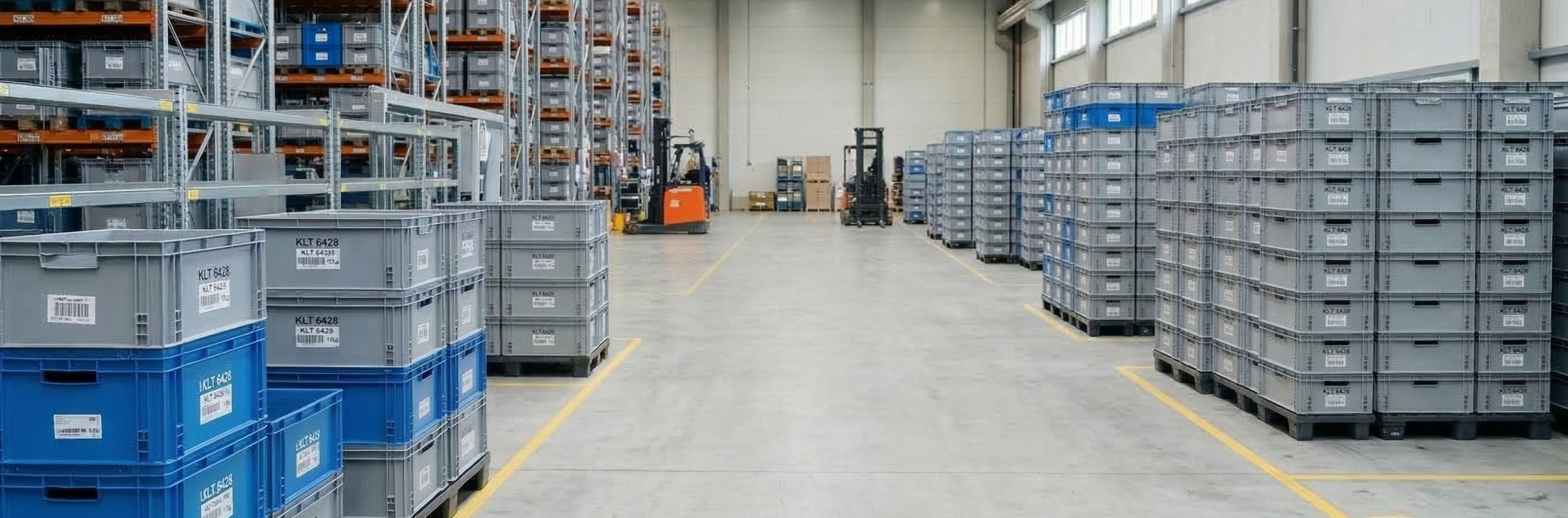
Most supply chains don’t have a true container shortage—they have a circulation problem:
- Empty containers stranded at the wrong node
- Lack of usable containers at the plant during production peaks
- Unclear condition (dirty, damaged, nonconforming)
- Loss and shrink that no one can explain
- Poor visibility into dynamic and static inventory
A well-run CMC turns packaging from “chaos in the background” into a controlled flow with measurable service levels and accountability.
This system view aligns with the SCOR model’s “Return” process, which explicitly includes return management for reusable packaging like pallets and containers.
1) Faster Container Turns = Faster Material Flow
In manufacturing, cycle time is money. The faster containers are returned, restored to a usable state, and redeployed, the fewer containers you need in total—and the less buffer inventory you carry “just in case.”
A CMC boosts efficiency by:
- improving empty availability at plants (supports JIT/JIS rhythms)
- reducing waiting time at docks and line-side staging
- increasing packaging pool utilization across suppliers and sites
In short: a CMC reduces friction at every handoff, making material flow more predictable and production more stable.
2) Standardized Cleaning, Inspection, and Repair Keeps the Supply Chain Stable
Reusable programs often fail quietly when container quality drifts: labels stop scanning, latches break, contamination increases, and damaged containers leak into operations—creating exceptions that slow everything down.
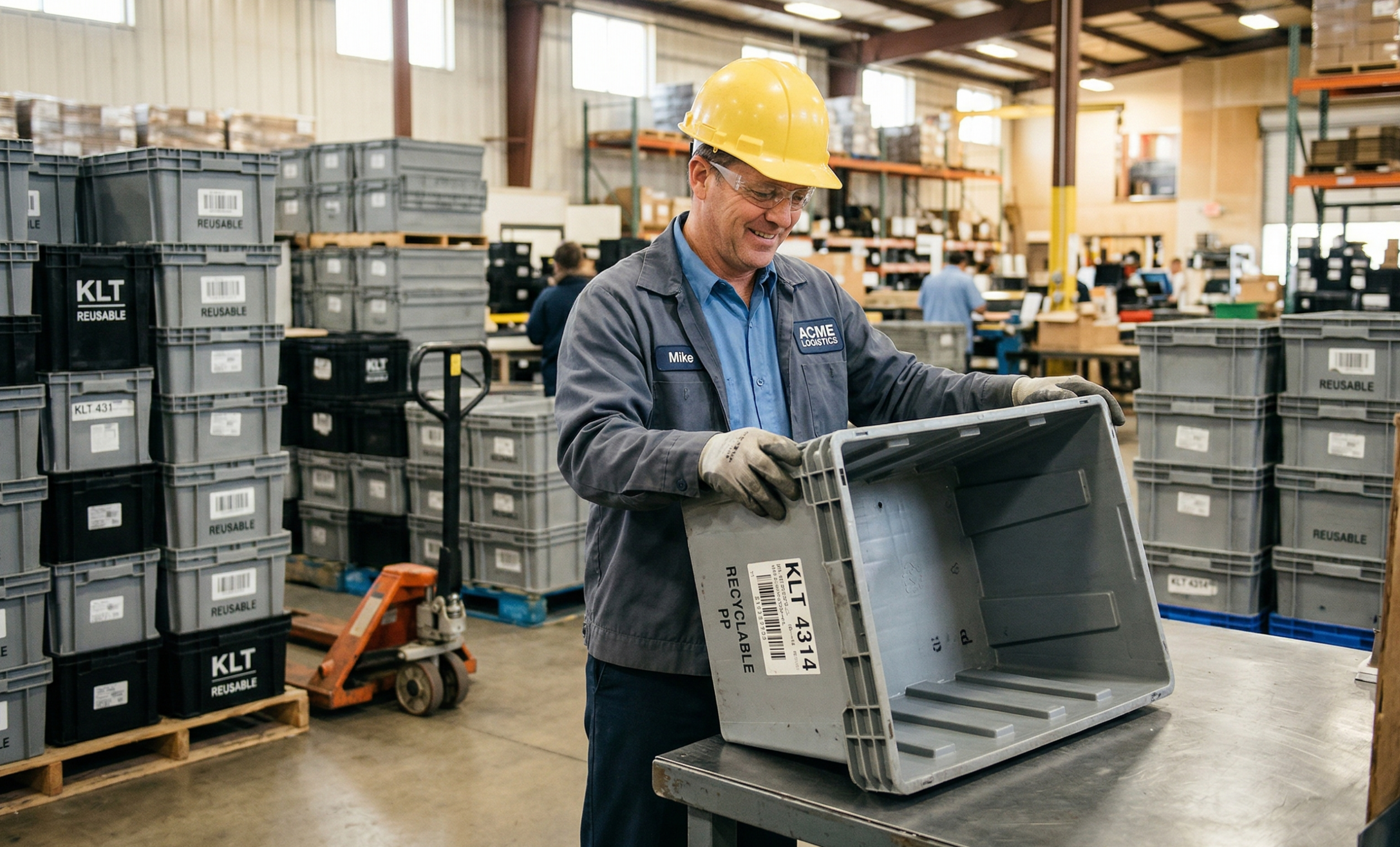
A CMC institutionalizes standard operating procedures and skilled execution for:
- cleaning and sanitation
- inspection and sorting
- repair, refurbishment, and preventive maintenance
- “ready-to-deploy” quality gates
This isn’t optional rigor—there are formal standards guiding the cleaning and sanitation of reusable transport packaging. For example, ISO/TS 22984:2021 provides guidelines for cleaning and sanitation procedures for reusable transport packaging.
In food and controlled environments, industry guidance also stresses disciplined wash operations, GMP-style practices, and consistent handling standards for reusable containers.
3) Network-Level Balancing Maximizes Asset Utilization
Demand is never perfectly balanced:
- one plant ramps up while another slows down
- supplier shipping rhythms shift
- seasonal peaks create short-term shortages
A CMC acts as a network control point for redistribution and rebalancing, enabling packaging to be moved to where it’s needed most—regionally or globally—without overbuying new containers.
This is one of the biggest hidden value drivers: a CMC reduces the “overbuy premium” organizations pay when they lack visibility and redistribution capability.
4) Clear Visibility Into Packaging Inventory and Performance
A CMC turns packaging into managed inventory with operational metrics—not guesswork. Mature CMCs track performance through KPIs such as:
- cycle time (days per loop)
- dwell time by site/partner
- damage and repair rates
- loss/shrink rates
- cleaning throughput and backlog
- service level (empty availability vs. demand)
This visibility is exactly what modern returnable packaging management solutions emphasize: tracking shipments, receipts, and returns to reduce loss and damage and improve inventory transparency across partners.
5) Fewer Exceptions, Higher Throughput
In supply chains, exceptions are expensive:
- a dirty tote triggers rework
- a broken latch blocks automation
- packaging shortages cause line-side disruptions
- missing containers create disputes and delays
By keeping containers available, clean, functional, and standardized, a CMC reduces operational exceptions and increases throughput—especially in automation-heavy environments where consistency is non-negotiable.
Why CMC Matters More as Supply Chains Become More Automated
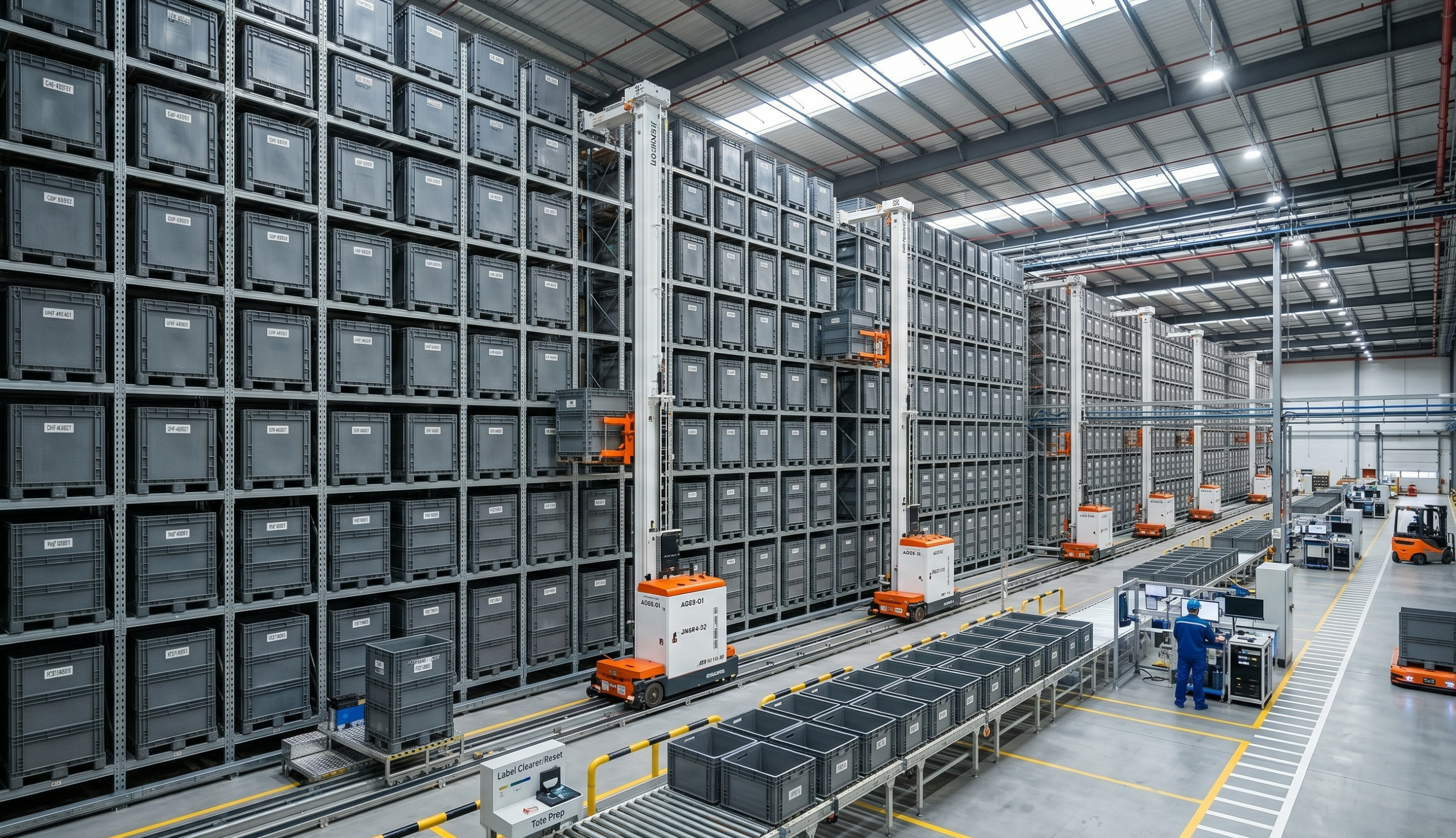
Automation amplifies both strengths and weaknesses. If packaging is inconsistent, automation produces stoppages and manual overrides. If packaging is standardized and CMC-managed, automation runs smoother, uptime improves, and performance becomes predictable.
That’s why a CMC isn’t a “nice-to-have.” It’s a foundational capability for scalable reusable packaging programs.
X-INDUSTECH and Our CMC Capabilities
X-INDUSTECH supports customers with a full packaging lifecycle approach—combining engineering expertise with operational execution. Headquartered in Shanghai with a U.S. base in Lewes, Delaware, we provide custom and standard plastic packaging solutions for manufacturing, warehousing, and logistics.
Our CMC-oriented services are built to help customers run reusable packaging as a system, including:
- container circulation planning and coordination (JIT empty availability)
- standardized operations for cleaning, inspection, and maintenance
- repair/refurbishment workflows to keep assets “production-ready”
- inventory visibility and pool balancing across sites
- integration with broader programs: sales, leasing, used containers, recycling, and relocation
Comment